Slovakia · E-invoicing compliance
Prepare for Mandatory eFaktúra in 2027
From 1 January 2027, every VAT payer in Slovakia must issue domestic B2B invoices electronically – as an e-invoice (locally called eFaktúra) over the Peppol network. Billdu is preparing full support. Start invoicing with Billdu today and be ready for mandatory e-invoicing in time.
7-Day Free Trial
Cancel Anytime
Slovakia · E-invoicing compliance
Prepare for Mandatory eFaktúra in 2027
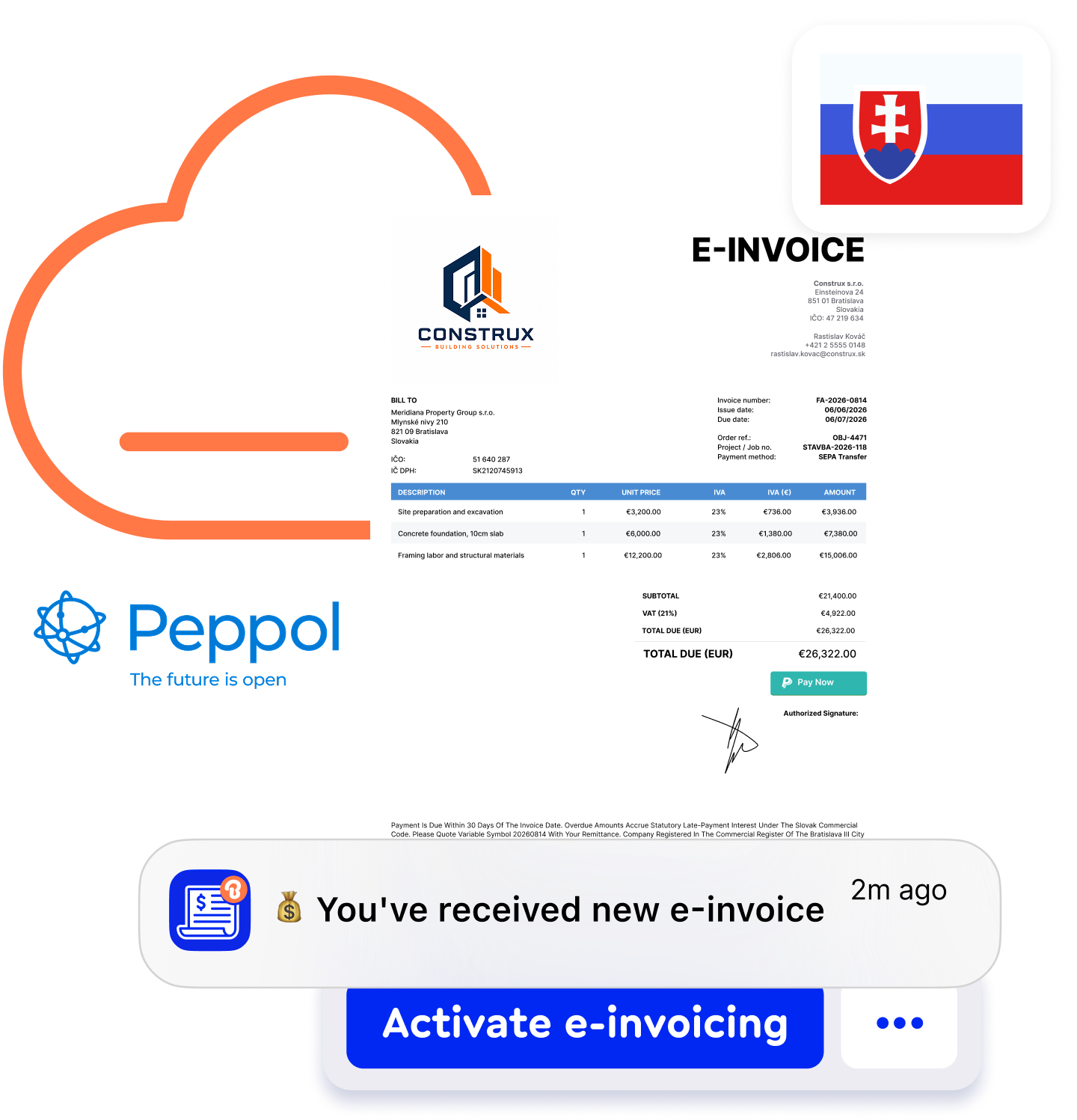
From 1 January 2027, every VAT payer in Slovakia must issue domestic B2B invoices electronically – as an e-invoice (locally called eFaktúra) over the Peppol network. Billdu is preparing full support. Start invoicing with Billdu today and be ready for mandatory e-invoicing in time.
7-Day Free Trial
Cancel Anytime
4.9
★★★★★
70,000+ ratings
1.5M+
Small businesses
use Billdu daily

Coming soon to Billdu: support for mandatory e-invoicing
We’re building support for e-invoicing (eFaktúra) over the Peppol network and will launch it well before 1 January 2027, so you’re ready in time. Use Billdu for all your invoicing today – and we’ll let you know the moment it goes live.
What is eFaktúra in Slovakia?
An e-invoice – in Slovakia called eFaktúra – is an invoice in a structured XML format that businesses exchange over the European Peppol network through a certified service provider, known locally as a digitálny poštár (“digital postman”). In Slovakia it becomes mandatory on 1 January 2027 for all VAT payers on domestic B2B and B2G invoices. Every business – including sole traders and non-VAT-registered businesses – must be able to receive them.
|
What eFaktúra is |
A structured electronic invoice (XML) under the EN 16931 standard, delivered over the Peppol network |
|---|---|
|
Who it applies to |
Issuing: all VAT payers · Receiving: every business, including non-VAT-registered businesses, sole traders and the self-employed |
|
In effect from |
Mandatory from 1 Jan 2027 · a voluntary phase is already running in 2026 |
|
Format |
XML – Peppol BIS Billing 3.0 / UBL 2.1, EN 16931 standard |
|
How it’s delivered |
Through a certified service provider (digitálny poštár), acting as a Peppol Access Point |
|
Penalties |
Up to €10,000 per breach, up to €100,000 for repeated breaches |
|
Legislation |
Act No. 385/2025 Coll. (amendment to the VAT Act) · EU ViDA directive 2025/516 |

Mandatory e-invoicing in Slovakia – what the law says
Slovakia is introducing mandatory e-invoicing through Act No. 385/2025 Coll., which amends the VAT Act and transposes the EU’s ViDA (VAT in the Digital Age) directive. From 1 January 2027, every VAT payer established in Slovakia must issue invoices electronically for domestic B2B and B2G transactions. Paper invoices and PDFs will no longer be enough – they are replaced by the structured Peppol BIS Billing 3.0 (XML) format under the EN 16931 standard.
A voluntary phase is already running in 2026, so you can prepare without pressure. Failing to comply from 2027 carries penalties of up to €10,000, and up to €100,000 for repeated breaches.
Where does Billdu fit in? We’re building support for mandatory e-invoicing into Billdu. The goal is simple: you create an invoice the way you always have, and Billdu handles the conversion to the Peppol format and its delivery through a certified service provider. We’ll launch this support well before 1 January 2027. Until then, use Billdu for all your everyday invoicing – switching e-invoicing on later will be a single step.
Who does mandatory e-invoicing apply to?
The obligation has two sides – and this is what catches many businesses out. Issuing e-invoices is one thing; being able to receive them is another.
Who must issue e-invoices
- All VAT payers established in Slovakia, on domestic invoices to another business (B2B) or to the state and public institutions (B2G).
- The obligation follows VAT registration, not how you claim expenses.
When you do NOT need an e-invoice
- Invoicing final consumers (B2C) – unchanged (paper, PDF, cash-register receipt).
- Simplified invoices and eKasa receipts stay valid within the statutory limits.
- VAT-exempt supplies and specific cases.
Who must be able to receive – nearly everyone
- Every taxable person invoiced by a VAT payer – including sole traders, the self-employed and non-VAT-registered businesses.
- Also liberal professions (lawyers, notaries, architects, artists), self-employed farmers and landlords carrying out an economic activity.
- A non-VAT-registered business doesn’t issue e-invoices, but must be able to receive them through a certified service provider.

Certified service provider
What is a digitálny poštár, and why you’ll need one
A digitálny poštár – literally a “digital postman” – is a certified delivery service provider that acts as a Peppol Access Point. Think of it as the mail carrier for digital invoices: it validates the format, encrypts the content and securely delivers the e-invoice, while passing selected data to the Financial Administration (Finančná správa). From 2027, without a contracted certified service provider you can’t send or receive e-invoices.
An important distinction: invoicing software and a certified service provider are not the same thing. Invoicing software (like Billdu) creates the invoice; the certified service provider delivers it. Most businesses need both – unless their invoicing app handles Peppol delivery for them.
That’s exactly what we’re building in Billdu: invoice creation and Peppol delivery in one place. We’ll launch e-invoicing support before it becomes mandatory.
How Billdu will get you ready for e-invoicing
Billdu is a full invoicing app you can use today – and we’re building support for mandatory e-invoicing into it. Start now, and the switch will be smooth.
What Billdu does today
Create an invoice in seconds – desktop, tablet or mobile, in front of your customer
Send it as a PDF, by e-mail or via a link and get paid online
Credit notes, quotes, expenses and stock – your whole workflow in one place
Full invoice status tracking – sent, delivered, seen
What we’re building for eFaktúra
Launching before 1 Jan 2027
Peppol BIS Billing 3.0 (XML/UBL 2.1) under EN 16931 – no manual XML
Sending e-invoices over Peppol straight from Billdu, via a certified service provider
Receiving e-invoices from suppliers into your account
Reporting data to the Financial Administration in line with the law
How e-invoicing will work in Billdu
Once we launch e-invoicing support, the whole process will be simple.

Create the invoice
Enter the invoice in Billdu the way you always have – desktop or mobile.

Billdu prepares it
Billdu converts it into the Peppol BIS 3.0 (XML) format under EN 16931.

The invoice is delivered
Sent over Peppol to the recipient; selected data goes to the Financial Administration.
How e-invoicing will work in Billdu
Once we launch e-invoicing support, the whole process will be simple.

Create the invoice
Enter the invoice in Billdu the way you always have – desktop or mobile.

Billdu prepares it
Billdu converts it into the Peppol BIS 3.0 (XML) format under EN 16931.

The invoice is delivered
Sent over Peppol to the recipient; selected data goes to the Financial Administration.
What’s included in Billdu’s Peppol support
We’re working to cover everything Slovak law requires. Launching before 1 Jan 2027.

Peppol BIS 3.0 format
UBL 2.1 syntax, EN 16931-compliant. Billdu converts your invoice automatically.

Sending over Peppol
Delivered over the Peppol network with no manual XML.

Receiving e-invoices
E-invoices from suppliers arrive straight in Billdu.

Credit notes & corrections
A correction linked to the original invoice, sent over Peppol.

Invoice from mobile
Create and send an e-invoice from your phone – anytime, anywhere.

Status tracking
Sent, delivered, seen – full visibility on every invoice.
Try the Billdu App
Get ready before everyone scrambles at once
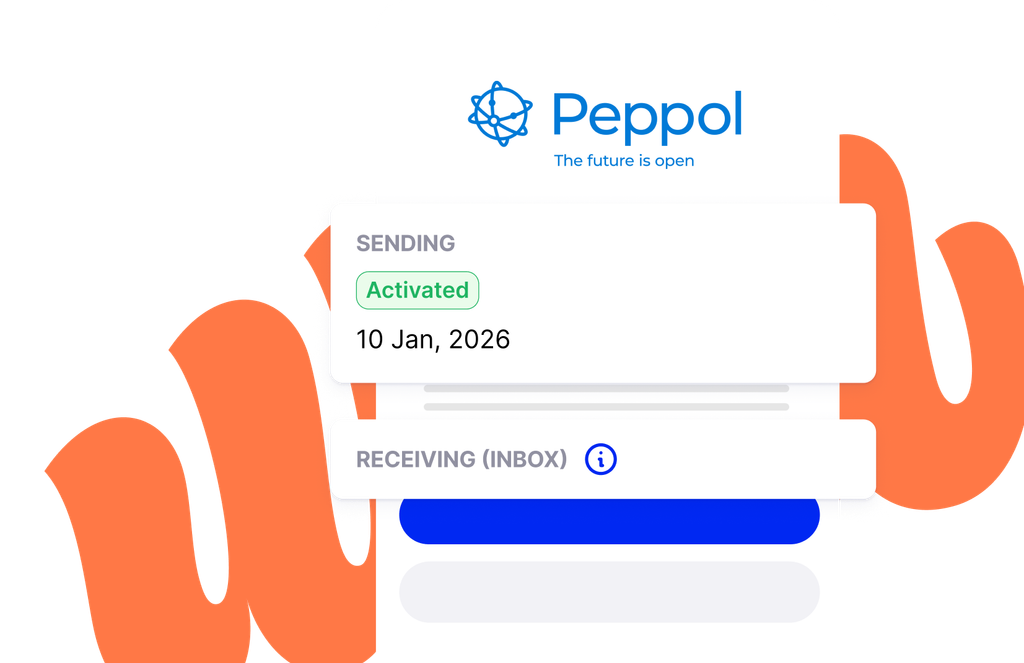
The voluntary phase is already running. Download our app and be among the first to know when e-invoicing goes live in Billdu – well ahead of 2027.
7-Day Free Trial
Cancel Anytime
Try the Billdu App
Get ready before everyone scrambles at once
The voluntary phase is already running. Download our app and be among the first to know when e-invoicing goes live in Billdu – well ahead of 2027.
7-Day Free Trial
Cancel Anytime

Featured by Apple
#1 Invoice Maker

4.9
★★★★★
70,000+ ratings


Featured by Apple
#1 Invoice Maker
4.9
★★★★★
70,000+ ratings
“The only invoicing app you should consider! Billdu helped me get invoices out when my other invoicing app failed me miserably.”
★★★★★

Shane,
Electrician
“Get paid way quicker now. Clients tap once and it’s done. Best app I’ve used for my plumbing business!”
★★★★★

Dandy,
Plumber
“This is probably one of the easiest apps to create invoices!”
★★★★★

Sergey,
Photographer
“Turned an estimate into an invoice in one tap, immediately sent to client. So easy, looks great, saves me loads of time.”
★★★★★

Martina,
Designer
Featured by Apple
#1 Invoice Maker
4.9
★★★★★
70,000+ ratings
Featured by Apple
#1 Invoice Maker
4.9
★★★★★
70,000+ ratings
“The only invoicing app you should consider! Billdu helped me get invoices out when my other invoicing app failed me miserably.”
★★★★★
Shane,
Electrician
“Get paid way quicker now. Clients tap once and it’s done. Best app I’ve used for my plumbing business!”
★★★★★
Dandy,
Plumber
“This is probably one of the easiest apps to create invoices!”
★★★★★
Sergey,
Photographer
“Turned an estimate into an invoice in one tap, immediately sent to client. So easy, looks great, saves me loads of time.”
★★★★★
Martina,
Designer
Related Articles
-

VeriFactu in Spain: What It Means for Your Invoicing
VeriFactu is one of the biggest invoicing changes Spain has introduced in years. The invoice your customer receives can still look the same.…
-
Already Got the Billdu Business Kit? Here’s How to Make the Most of It
You’ve unlocked the full power of Billdu. Now let’s make sure you’re using everything the Kit offers – from sending invoices and booking…
-

Introducing the Billdu Business Kit: 4 apps in 1 subscription
All-in-one access. Smarter tools. One simple subscription. The Billdu Business Kit has officially launched and it’s changing how you run your business. We’re…
Got questions?
E-invoicing becomes mandatory on 1 January 2027 for VAT payers on domestic B2B and B2G transactions. A voluntary phase is already running in 2026. The rules are set by Act No. 385/2025 Coll.
From the same date, every business invoiced by a VAT payer – including sole traders and non-VAT-registered businesses – must be able to receive e-invoices through a certified service provider.
All VAT payers must issue e-invoices for domestic invoices to businesses and the state. Every taxable person – including sole traders and non-VAT-registered businesses – must be able to receive them. It doesn’t apply to consumer (B2C) invoices or simplified eKasa receipts.
Peppol is a European network for the secure exchange of electronic invoices. Slovakia chose a decentralised model in which each party has its own certified service provider. The Peppol Authority for Slovakia is the Financial Directorate of the Slovak Republic.
A digitálny poštár (certified service provider) is an accredited intermediary – a Peppol Access Point – that delivers the e-invoice. Invoicing software only creates the invoice. Most businesses need both, unless their app handles delivery for them.
Not yet – we’re building support for mandatory e-invoicing into Billdu and will launch it well before 1 January 2027. You can already use Billdu as a full invoicing app today. Download the Billdu app and we’ll let you know when e-invoicing goes live.
Yes – but only on the receiving side. They don’t have to issue e-invoices, but must be able to receive them, and therefore need a certified service provider. They can keep issuing invoices as before.
An e-invoice is a structured XML file processed automatically; a PDF is a document for humans. From 2027, a PDF is not enough for B2B – it can only serve as a visual copy attached to the official XML e-invoice.
Credit notes and corrections are also issued electronically and linked to the original invoice. An advance (proforma) invoice is not a tax document, so it doesn’t need to go over Peppol – only the final invoice after supply does.
Up to €10,000 per breach, and up to €100,000 for repeated breaches. No penalty applies for an obvious error corrected without delay or a documented failure of the certified service provider.
The main cost is the certified service provider – the Financial Administration cites an EU average of €5 to €12 per month, and free receiving-only plans exist. On top of that is the invoicing software you create invoices in.
Start during the voluntary phase: check whether your invoicing software is e-invoicing-ready and try selecting a certified service provider. We’re building e-invoicing into Billdu – download the app and we’ll let you know when it goes live.